
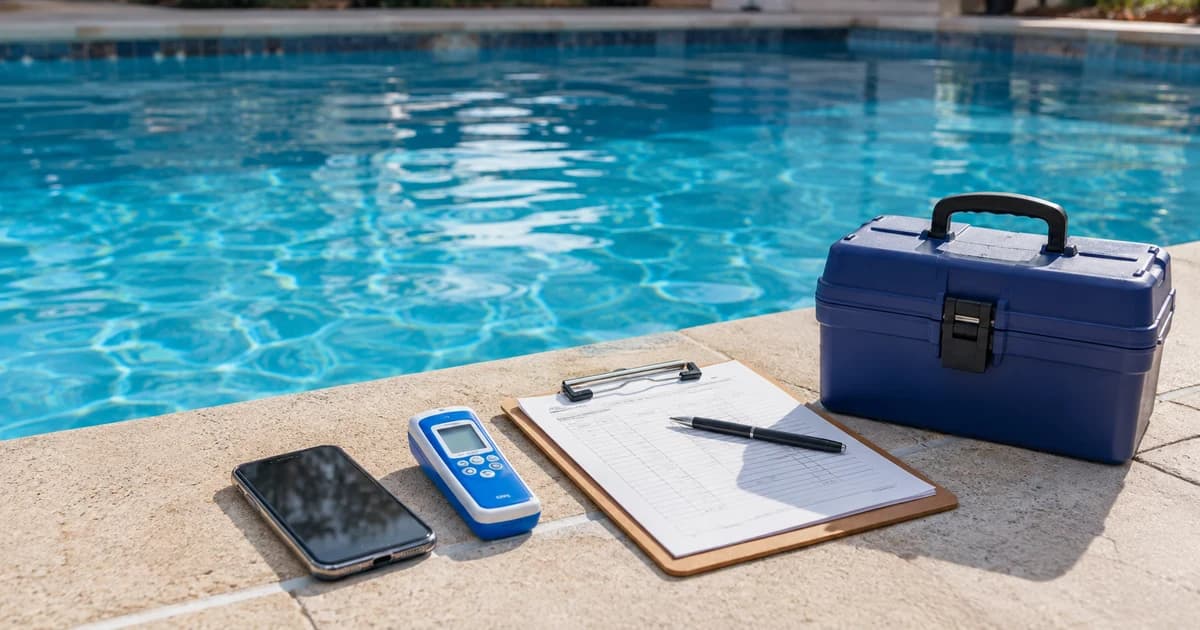
Pool and spa operations
Key takeaways
- Preserve source-labeled facts for close and reopen an str pool or spa after a contamination report.
- Keep guest support separate from technical and property authority.
- Close the record only when the guest-facing promise matches the verified condition.
Operating data
Playbook
A guest report involving feces, vomit, blood, an animal, cloudy water, or an unknown substance in a pool or spa needs a quick closure and a qualified response. It does not need remote chemistry advice. The assistant's job is to stop mixed messages, preserve the report, reach the property's pool professional, and keep the amenity closed until the correct authority supplies reopening evidence.
Prepare a closure card for the actual water feature
List every pool, spa, hot tub, plunge pool, and shared aquatic feature connected to the property. Record whether the feature is private or building-managed, its location, service company, after-hours contact, local health authority, access-control method, gate owner, posted rules, testing record, and the operator authorized to close or reopen it.
Private and shared facilities need different contact paths. A building manager may control a condominium pool even when the rental operator controls guest communication. A service technician may maintain both a pool and spa but apply different treatment and circulation requirements. The card should identify each body of water separately.
The Centers for Disease Control and Prevention publishes operational guidance for responding to fecal incidents in treated recreational water. Use the current guidance through the qualified pool operator or health authority. Do not reduce its tables and conditions to a casual support script, especially when the contaminant or treatment history is uncertain.
Close access before collecting a long narrative
Ask what was observed, where, when, whether anyone is injured or ill, whether the material is still present, and whether guests are currently in the water. Send the approved exit and keep-out message. If the feature has a gate or cover, contact the authorized onsite person or building staff to control access. Do not ask a guest to retrieve material, add chemicals, operate equipment, take a close photograph, or remain nearby for inspection.
Treat reports about chemical fumes, electrical hazards, entrapment, drowning, serious illness, or injury through the emergency plan. The contamination workflow should not delay emergency services. Preserve the reporter's language instead of selecting a contaminant category from a vague description.
If the report comes from a sensor or camera, record exactly what the system detected. A water-quality reading may support a service alert, but it does not identify an unknown object. A camera image may show someone entering the pool; it cannot establish water chemistry or health risk.
Build a treatment record without directing the treatment
The qualified operator should receive the feature identity, report time, description, last known use, current closure state, and any relevant maintenance log. Record who accepted the response and their arrival estimate. A dispatch confirmation is not treatment evidence.
Keep the provider's sequence intact: inspection, contaminant classification if possible, measured conditions, treatment choice, circulation or filtration actions, closure duration, retesting, and release. Support should not calculate chemical doses, interpret a test strip, or shorten a closure because guests are waiting. If the provider cannot identify the material, record the conservative action they choose.
For example, a guest reports an unknown brown material in a shared spa at 8 p.m. Building staff close the spa but say the main pool looks normal. Support tells the reporting party that both features' status is being confirmed rather than assuming one treatment loop or independent circulation. The building's pool professional identifies which water is affected and controls the technical response. The rental manager handles the lost-amenity decision.
Keep the guest decision separate from water treatment
The operator needs a short impact brief: affected feature, closure time, occupied reservations, prominence in the listing, weather, verified alternatives, provider acceptance, earliest possible evidence checkpoint, and next arrival. The brief should not present the shortest treatment duration as a promised reopening time.
Tell guests which feature is closed, how access is controlled, and when another update will arrive. Avoid graphic detail and do not identify the reporting guest. A message might read: "The courtyard spa is closed while the building's pool professional responds to a contamination report. Please do not enter or remove the closure sign. The main pool's status is being confirmed separately. We will update you by 9 p.m."
If the amenity materially affected the booking, route refund, relocation, or other hospitality decisions to the manager. The pool technician should not negotiate a guest remedy, and the assistant should not imply that technical treatment settles the business decision.
Require release evidence tied to the incident
Reopening requires more than the contaminant being removed or the water looking clear. Obtain the qualified operator's record for the correct feature and incident. It should identify the inspection and treatment times, measured conditions they rely on, completed circulation or filtration interval, final checks, remaining restrictions, and explicit release status.
Confirm the physical side as well. The closure control must stay in place until release. The deck, gate, cover, signage, and related equipment need the dispositions required by the property plan. If an illness report triggered a health-department instruction, that instruction remains part of the release gate.
When the feature reopens, send a factual update to affected guests. Do not say the water is "perfectly safe" or "sanitized" beyond the provider's finding. State that the qualified operator released the named feature at the recorded local time and repeat any remaining rule.
Learn from the contamination timeline
Review how quickly access closed, whether guests acknowledged the message, how long provider acceptance took, whether staff identified the right water feature, and whether public amenity information stayed accurate. Note if a worker removed a sign too early or if an automated message promoted the spa during closure.
Keep incident types separate in trend reviews. Confirmed fecal incidents, vomit, blood, animal entry, glass, chemical imbalance, cloudy water, and unidentified material involve different evidence. Do not publish health or frequency claims from a small internal set. Use the review to improve contacts, gate controls, inspection timing, and guest notices.
This routine gives the operator a controlled closure and a defensible reopening record. STRVirtualAssistant can coordinate the communications and checkpoints through operations follow-through, while pool professionals and public-health authorities keep technical control. Request a tailored support plan to document each property's water features and response owners.
Authoritative sources
CDC guidance for fecal incidents in treated recreational water. Review the live source and property-specific requirements when applying this routine.
FAQ
When should a leader delegate this workflow?
Delegate it when repeated coordination, routing, or follow-up is taking time away from decisions that only the leader can make.
What should the assistant own first?
Start with intake rules, status visibility, and escalation timing so the assistant can act consistently before the workflow expands.